
Categories
Land ManagementPublished August 4, 2026
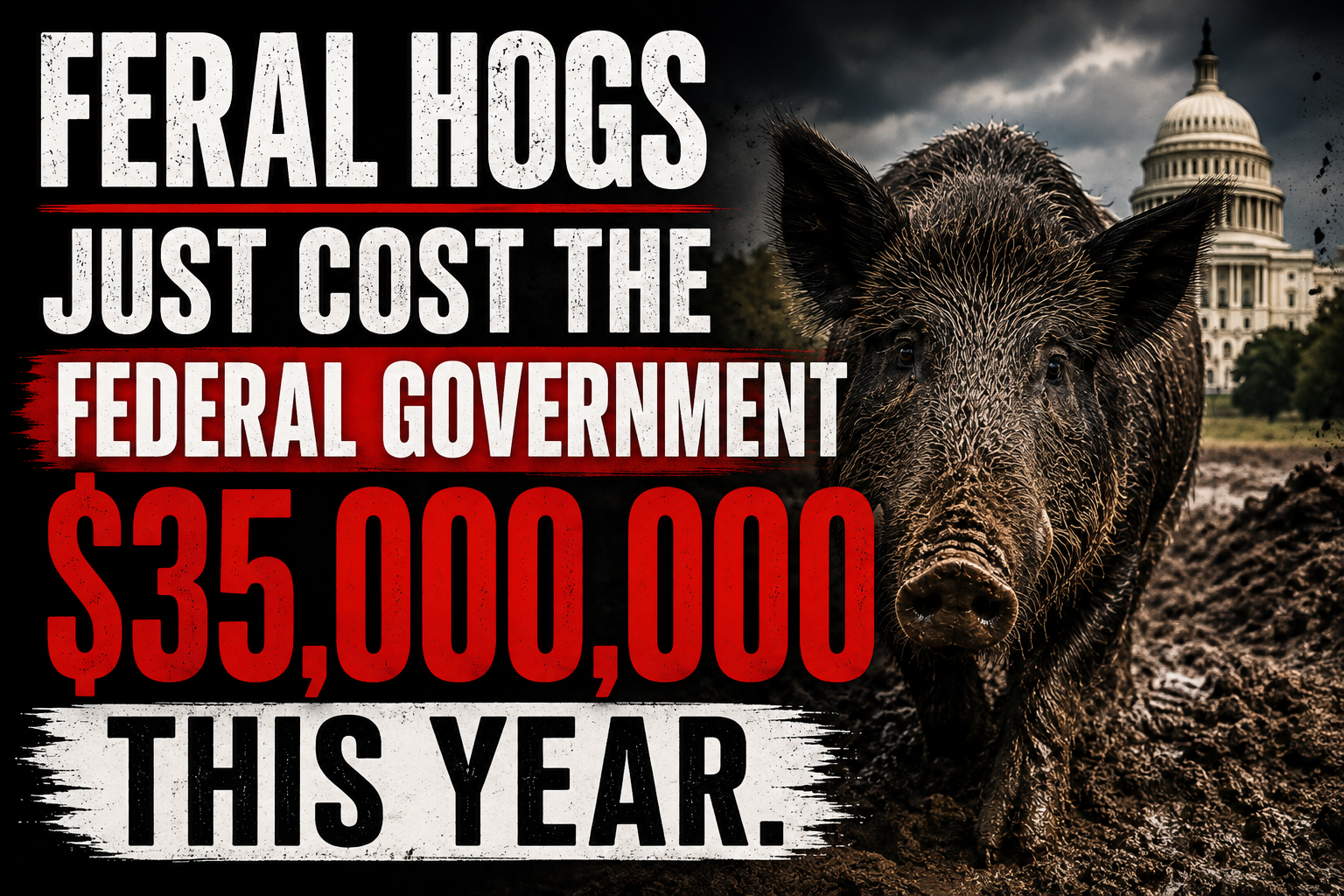
Feral Hogs Just cost Federal Govt. $35M
The USDA Just Put $35 Million Toward Your Hog Problem — Here's What It Means for Landowners
If you own land in Texas, you've probably already met the enemy. Torn-up pastures. Wrecked fence lines. A hay field that looked fine on Friday and looks like a plow ran through it by Monday morning. Feral hogs don't ask permission, and they don't stop multiplying.
That's why a recent USDA announcement is worth your attention. The department is offering $35 million in new grants to fight feral swine damage across 14 states — and Texas is on the list.
What's Actually Happening
The USDA is funding partnerships — not individual landowners directly — to tackle feral hog damage through trapping, land restoration, and disease protection work. This $35 million is part of a larger $105 million federal eradication and control effort. (Source: USDA, via RFD-TV, August 2026)
The states eligible for these projects are:
Alabama, Arkansas, California, Florida, Georgia, Hawaii, Louisiana, Mississippi, Missouri, North Carolina, Oklahoma, South Carolina, Tennessee, and Texas.
Applications are due September 21. Selected partner organizations will then work directly with landowners on trapping, habitat restoration, training, and related services. The whole effort is being coordinated through the Natural Resources Conservation Service (NRCS) and the Animal and Plant Health Inspection Service (APHIS).
Why This Matters More Than It Sounds
Here's the number that should really grab your attention: feral swine cause more than $3.4 billion in damage every year — to crops, pastures, soil, water resources, and wildlife habitat.
That's not a rounding error. That's a real, ongoing hit to land productivity and land value. Every root-torn pasture and every busted water line is money out of a landowner's pocket, whether that shows up in a lower hay yield, a costlier fence repair, or a harder conversation at resale time.
If you've ever tried to sell a property with visible hog damage, you know appraisers and buyers notice. Damaged land reads as neglected land, even when it isn't.
Who This Actually Helps
To be clear: this money doesn't show up as a check in an individual rancher's mailbox. It flows to partner organizations — conservation districts, ag co-ops, and similar groups — who then bring trapping crews, restoration work, and training directly to producers.
If you're part of a co-op, conservation district, or agricultural organization, this is worth looking into before the September 21 deadline. And if you're not part of one, it's worth asking around locally — because whoever wins these grants in your county will likely be doing boots-on-the-ground work nearby.
The Bigger Picture
Feral hog control isn't just a farming problem — it's a land value problem. Buyers looking at recreational and ranch acreage are paying closer attention than ever to habitat condition, fencing integrity, and pasture health. A property with an active, well-managed hog control plan is simply a stronger asset than one without.
Whether you're holding land for the long haul or thinking about what it looks like on the market someday, this is the kind of federal news worth keeping an eye on — not because it changes your bottom line today, but because it shapes the resources available to protect your land tomorrow.
I'm Greg Potts with GS Realty Team... We know this ground. Let's find yours.
Greg Potts
| Greg Potts | GS Realty Team | Fathom Realty
or another way