
Categories
CattlePublished October 1, 2026
Texas Stock Law by County: What Land Buyers Need to Know Before Buying Rural Acreage in North Texas
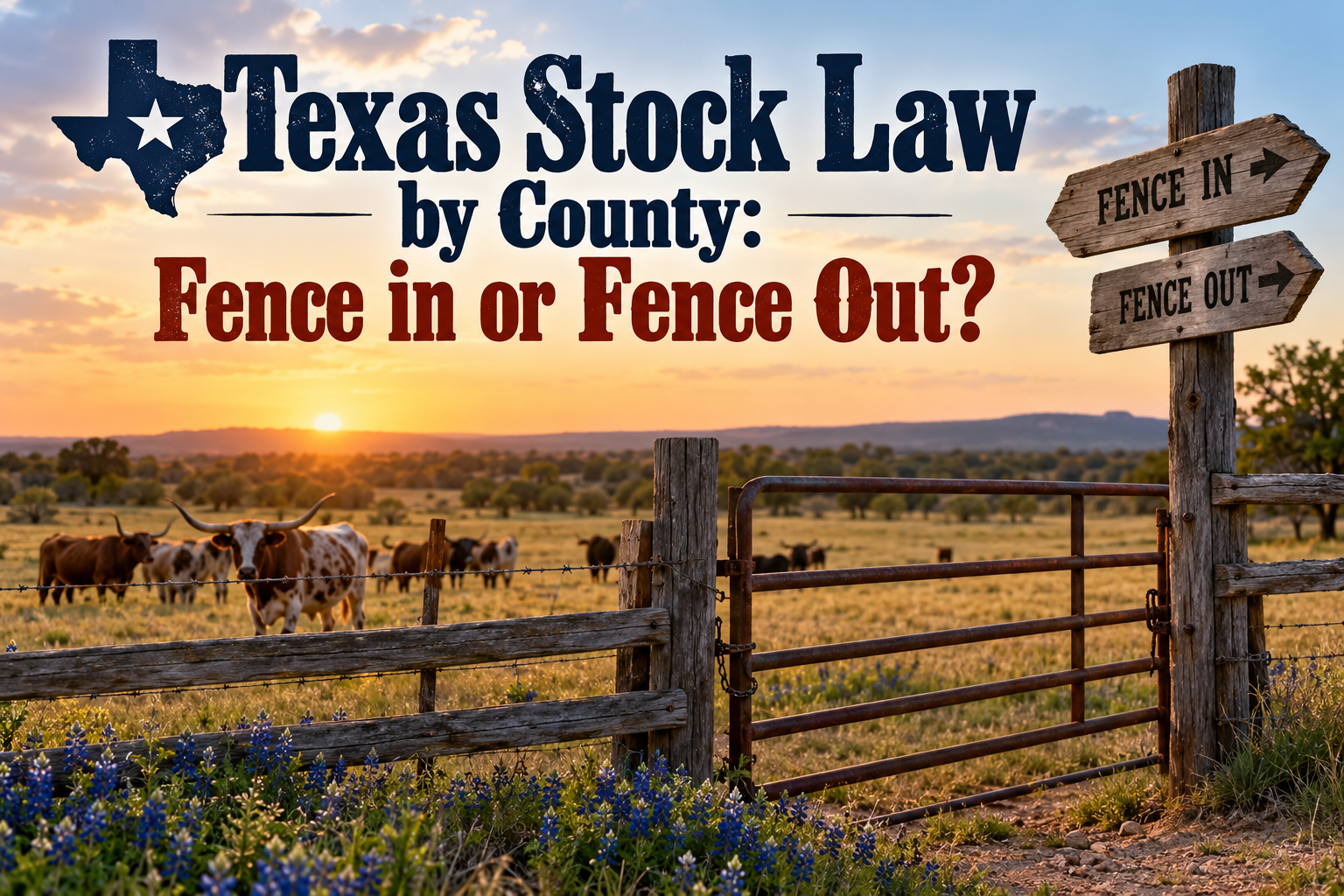
Your neighbor's cows end up in your yard. Whose problem is that?
The answer depends on something most land buyers never check: stock law.
I'm Greg Potts with GS Realty Team. I've helped people buy and sell ranch, horse, and recreation property across North Texas for years, and I'm a working rancher myself. Stock law surprises more first-time rural buyers than almost anything else, so here's how it works.
What Is Stock Law?
Texas is an open range state by default. Unless a county or area has voted otherwise, livestock owners aren't required to fence their animals in. If you don't want someone else's cattle on your place, the burden is on you to fence them out.
Counties can change that by local election under Chapter 143 of the Texas Agriculture Code. Once a stock law is adopted, the rule flips. Livestock owners can't permit covered animals to run at large, and they're responsible for keeping them contained.
- Stock law county ("fence-in"): The animal owner keeps livestock fenced in.
- No stock law ("fence-out"): If you want livestock off your land, you build a lawful fence to keep them out.
Why It Matters When You Buy Land
If you're buying acreage without livestock, a fence-out area means a missing or weak fence can leave you with no recourse when a neighbor's animals wander in.
If you plan to run cattle or horses, a stock law area means you're responsible when your animals get out, and that can mean liability for damage or injury.
Stock law also affects how you budget for fencing, how you set up gates and cross-fencing, and what you should ask about neighboring properties.
Stock Law Status in Our Area
Here's where the six counties I work in most stand, based on publicly available records:
- Parker County: Stock law applies to cattle only, adopted by election in 2002. Horses aren't covered.
- Palo Pinto County: No stock law. Open range.
- Erath County: Stock law adopted for horses, mules, jacks, jennets, hogs, sheep, goats, and cattle (1929).
- Wise County: Stock law adopted for all of those species (1918).
- Hood County: Mixed. It varies by precinct, and the historical records are incomplete. You need to check the specific property.
- Jack County: No stock law. Open range.
Two properties just a few miles apart can fall under different rules. That's especially true in Hood County, and in Parker County, where the answer changes depending on the animal.
Highways Are a Different Story
Whatever the county says, U.S. and state highways are closed range. Under the Texas Agriculture Code, an owner can't knowingly permit livestock to roam at large on a highway right-of-way. Farm-to-market roads follow the county's stock law status. In an open range area they're open range, and in a stock law area they're not.
Verify Before You Buy
These laws live in county commissioners court records, and there's no single statewide index. Records can be incomplete, and a law can differ by precinct or by animal. Before you close on rural property:
- Ask the county clerk whether a stock law was adopted and where it applies.
- Have your agent confirm the status for the specific property and the species you plan to run.
- Walk the fence lines, and ask who maintains each section.
- Talk to a Texas attorney if there's a dispute or a liability question.
*This post is general information, not legal advice.
Buying Land in North Texas?
I work with land buyers across Parker, Palo Pinto, Erath, Wise, Hood, and Jack counties, plus parts of Oklahoma. If you're looking at acreage, I'll check stock law status before you fall in love with a property. Call 817-694-1339
Verify with your Counties Clerk- NOT LEGAL ADVISE
Greg Potts
| Greg Potts | GS Realty Team | Fathom Realty
or another way