Published October 4, 2026
Why Texas Ranchers are loosing Grazing Rights

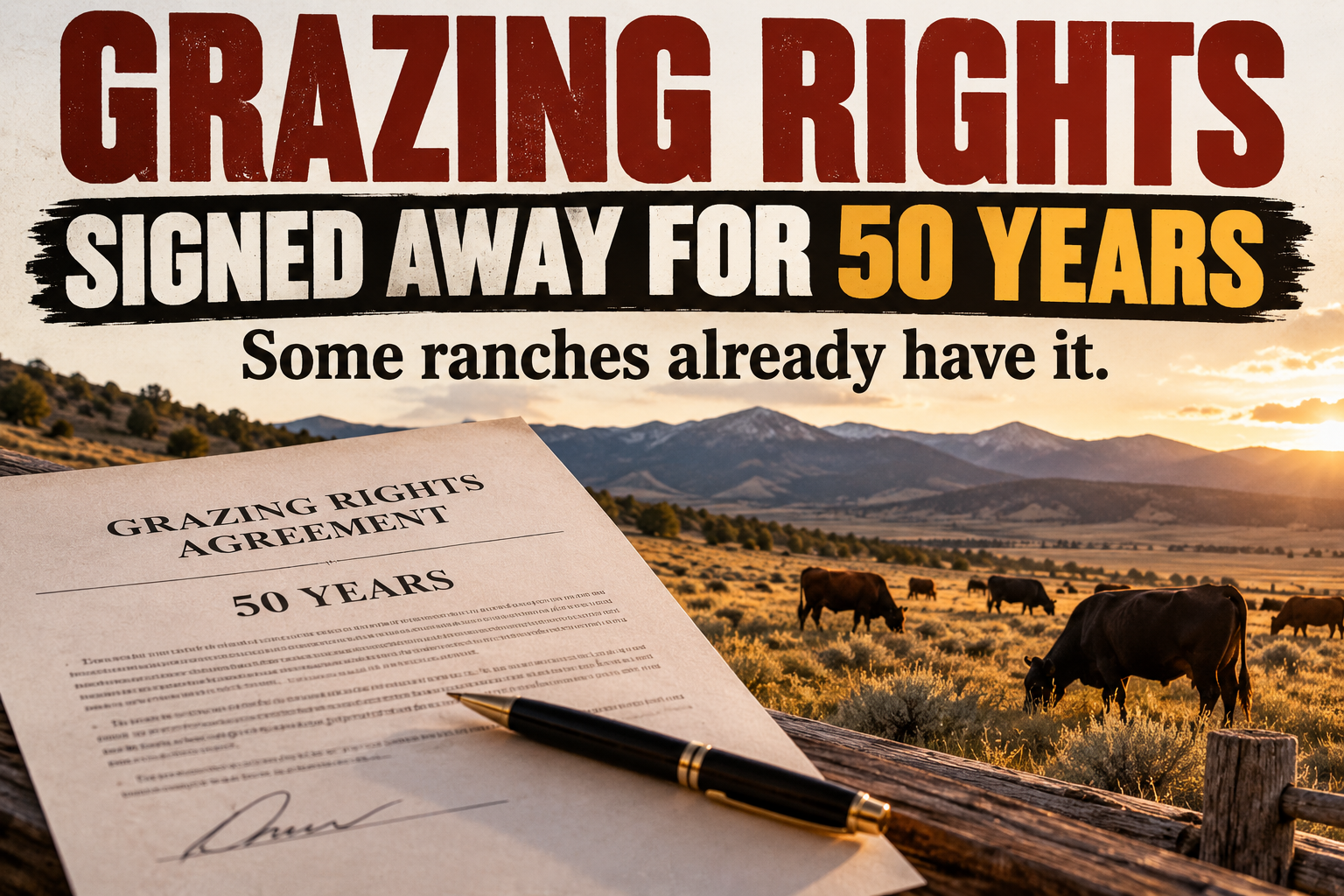
That Pretty Pasture Might Come With Fine Print: What Texas Ranch Buyers Need to Check Before They Close
By Greg Potts, GS Realty Team at Fathom Realty
Anyone can fall for a ranch in the photos. Rolling pasture, a good set of pens, a pond catching the evening light. What those photos never show is the paperwork filed against the land at the courthouse. After more than a decade of selling ranch and recreation property across North Texas and Oklahoma, I can tell you the buyers who sleep best are the ones who looked at the title as hard as they looked at the fence line.
A story out of New Zealand last month reminded me why. It is about a different country and a different kind of land, but the lesson applies to every Texas buyer thinking about a ranch today.
The Carbon Land Rush Overseas
Reuters reported in September on how carbon credits are reshaping rural New Zealand. For almost 20 years the country has run a tree-planting program under its emissions trading scheme, and it has approved nearly 9,000 square kilometers of carbon-credit forest. Forest owners earn credits as the trees grow and sell them to companies that need to offset emissions, which creates income long before a single tree is harvested.
That income changed the land market. Forestry investors were able to outbid sheep and beef producers for grazing ground, and grazing land prices rose 9.7 percent as investors chased credits. Farm groups there warn that once a property goes into trees, it is one less farm that a working family can ever buy.
Here is the part that matters for us. In New Zealand, that kind of land-use change can be very hard to reverse. A pasture that has been converted is no longer a pasture, and the people who might have bought it to run livestock are shut out.
Is This Happening in Texas?
Carbon programs are not nearly as large in Texas, but they are here. Texas A&M AgriLife Extension's ag law specialists have been fielding calls from landowners for years, because brokers and companies have been offering carbon contracts on Texas land. A typical deal involves the landowner, a broker, a verifier and a purchaser, and the landowner agrees to follow certain practices in exchange for payment.
Most of these contracts are for shorter terms than the ones making headlines overseas. An attorney interviewed in a Texas Farm Bureau report said contract terms of 10 to 15 years are common among those he has reviewed, and some contracts say they continue even if the land is sold or gifted.
The more important point is what the contract allows the other side to do to your title. AgriLife's guidance warns that carbon contracts may allow the credit purchaser to place a restrictive covenant or a lien on the property, or require the landowner to grant a conservation easement for the length of the contract. Those limits can hurt both marketability and sales price.
An honest caveat: a carbon contract is not automatically attached to the deed. Many are just contracts between the original landowner and a company. Whether a given agreement binds a new owner depends on the exact language and on whether anything was recorded in the county records. That is the whole point. You cannot assume either way, and you will not find out from the listing photos.
Conservation Easements Are the Heavy Hitter
If you want an example of something that absolutely does run with the land, look at a conservation easement. Texas law recognizes them under Chapter 183 of the Natural Resources Code, and the statute says a conservation easement lasts indefinitely unless the instrument that created it says otherwise. Land trust and conservation groups describe them plainly: they are a recorded interest, they become part of the land's title, and they bind all future owners.
Conservation easements are not bad. Plenty of ranching families use them to keep their land intact, and some buyers want exactly that. But the restrictions on subdividing, building or certain uses are real, and a buyer who learns about them after closing has a problem. Better to find out before you make an offer.
The Mineral Estate and Other Things Hiding in Plain Sight
Carbon and conservation are the new items on a long list of things that can limit what you do with your land. The old ones still matter just as much:
- Severed minerals. In Texas, the mineral estate can be separated from the surface and still remains the dominant estate, which means the mineral owner can use the surface to reach what is underneath unless a surface waiver says otherwise. Texas A&M's rural land checklist notes that mineral, groundwater and even wind rights may have been severed or reserved and may not come with the property.
- Easements. Roads, utilities and pipelines can all cut across a tract and affect where you can build, fence or run cattle.
- Leases. Existing grazing, hunting, oil and gas, or wind leases can run past your closing date.
- Liens and restrictive covenants. These show up in the recorded documents, not on the property.
How to Actually Check a Title Before You Buy
- Get the title commitment early and read Schedule B. That is where recorded easements, restrictive covenants, existing leases and mineral reservations are listed as exceptions to coverage. Use a title company that works in the county where the ranch sits, since they know that county's records.
- Order a real survey. A survey tied to the recorded easements shows how much of the land you can actually use. A fence-line survey is not the same thing as a land title survey.
- Ask the seller directly. Is there a carbon agreement, a conservation easement, a hunting or grazing lease, or a surface-use agreement? Ask for copies, and ask in writing.
- Get a mineral title opinion where it makes sense. In counties with oil and gas history, a Texas oil and gas attorney can tell you what is actually owned and by whom.
- Protect yourself in the contract. Use the Texas Real Estate Commission-approved farm and ranch contract, and keep your title and survey objection rights intact so you can renegotiate or walk away.
- Bring in an attorney for anything unusual. If a carbon or conservation document turns up, have an ag or real estate attorney read it before you commit. AgriLife's own advice to landowners is to have an attorney review any carbon contract before signing.
The Bottom Line
A ranch is not just fence, grass and water. It is also a bundle of rights, and sometimes someone else is holding a few of them. The buyer who finds that out in week one can negotiate, adjust the price or walk away. The buyer who finds out in year three just lives with it.
If you are looking at ranch, horse property or recreational acreage in Parker, Palo Pinto, Erath, Wise, Hood or Jack County, or across the river in Oklahoma, I would be glad to help you dig into what is really attached to a property before you close. Call me at 817-694-1339 or visit gsrealtyteam.com.
This post is general information for buyers and is not legal advice. Contracts and recorded documents vary, so have a licensed Texas attorney and your title company review the specific documents on any property you are considering.
Sources
- Lucy Craymer, "A carbon-credit land rush is hollowing out New Zealand farm country," Reuters, September 21, 2026. Republished at U.S. News and WHBL.
- Texas A&M AgriLife Extension, Texas Agriculture Law Blog, "Understanding & Evaluating Carbon Contracts." agrilife.org/texasaglaw.
- Texas A&M AgriLife Today, "Carbon credit brokers contacting agriculture, rural landowners in Texas." agrilifetoday.tamu.edu.
- Texas Farm Bureau, "Carbon credit brokers contacting Texas farmers, landowners." texasfarmbureau.org.
- Texas REALTORS magazine, "Get to Know Carbon Contracts," April 2022. texasrealestate.com.
- Texas Natural Resources Code, Chapter 183, Conservation Easements. Justia and Onecle.
- Texas Agricultural Land Trust, "Introduction to Conservation Easements" (presentation). sanantonioepc.org.
- National Agricultural Law Center / Texas A&M AgriLife Extension, "Texas Rural Land Purchasing Checklist" (AGEC-PU-205, May 2026). nationalaglawcenter.org.
- Texas Landowners Association, "How to Buy Land in Texas." landassociation.org.
- Amini & Conant, "Texas Raw Land Playbook for Buyers and Their Brokers, Part 3." aminiconant.com.