
Categories
WaterPublished July 20, 2026
Water Rights in Texas: The Full Story Every Ranch Buyer Should Know

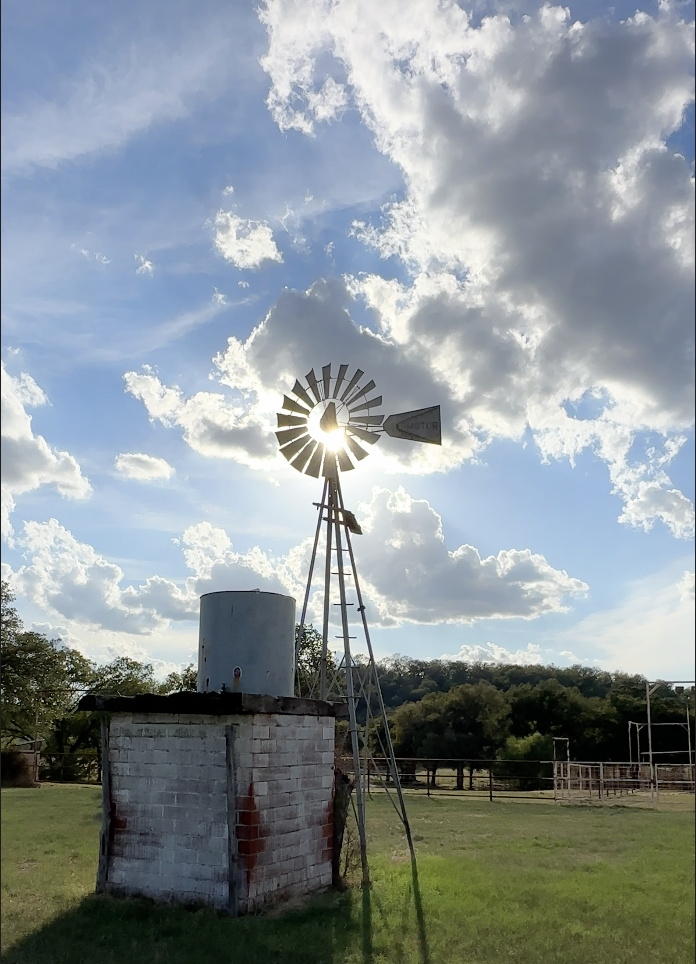
Let's talk about water. Not the kind you drink at dinner. The kind that decides whether your dream ranch actually works the way you think it will.
Here's the funny part: in Texas, you can own 100 acres and still not "own" the creek running through the middle of it. Weird, right? Let's break down why, in plain English, with the actual rules behind it — and a few laughs along the way, because water law does not have to feel like a punishment.

Two kinds of water, two totally different rulebooks:
Texas treats water like it has two separate personalities.
Water under the ground (the kind you hit when you drill a well) mostly belongs to whoever owns the land above it.
Water on top of the ground (creeks, rivers, natural lakes) belongs to the State of Texas. Yes, even if it's flowing right past your back porch.
One is basically yours. The other one is more like a really long line at the DMV that the whole state shares. Let's take them one at a time.
Groundwater: the "Rule of Capture"
Texas groundwater law comes from an old rule with a dramatic name: the Rule of Capture. It says a landowner can pump as much water as they want from under their own land — even if it dries up the neighbor's well.
That's not a modern idea. It goes back over 100 years, to a 1904 case called Houston & Texas Central Railway Co. v. East, where the Texas Supreme Court decided groundwater moves in such mysterious, hidden ways that it made more sense to treat it like something you simply "capture" — like catching a baseball. Whoever grabs it first, keeps it. (Texas Water Development Board)
Almost 100 years later, in 1999, a family named Sipriano tried to change that rule. A bottled water company had drilled nearby wells and pumped so much water that the Sipriano family's own well went dry. They sued and asked the Texas Supreme Court to switch to a fairer rule. The Court said no — the old Rule of Capture stays — but it did tell state lawmakers, politely but firmly, "you all should probably do something about this." (Findlaw case summary)
That nudge is a big part of why Groundwater Conservation Districts (GCDs) exist today. Texas now has close to 100 of these local districts, each one able to require well registration, set pumping limits, and referee disputes in their area. (Texas Water Development Board) So "capture whatever you want" isn't the whole story anymore — your local GCD may have a say in how big a straw you're allowed to use. (Click Here for Full map of GCDs)
Parker County sits inside the Upper Trinity Groundwater Conservation District. Palo Pinto, Jack, and Erath Counties each fall under their own local district too, and the boundaries aren't always tidy — so if groundwater matters to your purchase, it's worth a quick call to confirm exactly which district covers the specific property.
Surface water: Welcome to the world of "first come, first served"
Creeks, rivers, and natural lakes are a different animal entirely. That water belongs to the State of Texas, and using more than just a basic sip of it requires a permit from the Texas Commission on Environmental Quality (TCEQ). (TCEQ Water Rights Permitting)
Texas surface water runs on something called prior appropriation — a fancy legal term for "whoever got here first, drinks first." Every water right permit has a priority date, like a ticket number. In a drought, the oldest ticket number gets served in full before the newer ticket numbers get anything at all. A permit from 1920 beats a permit from 2015, every single time. (Texas A&M Agriculture Law Blog)
To actually get one of these permits, TCEQ has to check off several boxes, including that there's unclaimed water available, the use is a genuine "beneficial" one (like farming or drinking water, not just for fun), and it won't step on anyone else's existing water right. (Texas Water Code §11.134)
Here's a fun historical twist: Texas used to also recognize "riparian rights" — an older system where simply owning land next to a river gave you certain water rights automatically, no permit needed. In 1967, the state mostly did away with that and folded everyone into the permit-based system instead, unless a landowner had already gone through a formal process to keep their older rights. (Texas Water Rights Guide) So if anyone tells you "my family's always had rights to that river, no paperwork needed" — that claim needs some documentation to back it up these days.
The one loophole every rancher loves
Good news: you don't need a permit for everything. Texas Water Code lets landowners use surface water for basic domestic use and for watering livestock without a TCEQ permit. (Texas Water Rights Guide)
Even better: Texas Water Code §11.142 lets a landowner build their own stock pond or small reservoir on their own property for domestic and livestock use — no state permit required. (Texas Water Rights Guide) That's exactly why you'll never drive five minutes through North Texas ranch country without spotting a stock tank. It's the one part of Texas water law that basically says, "go ahead, build your pond, we trust you."
Why any of this actually matters when you're buying land
None of this is trivia for a bar bet. It's the kind of thing that changes what a property is actually worth and what you can do with it.
Before you get attached to a piece of ground, it's worth finding out:
- Is there a working well? What's it produced historically, and is it registered with the local GCD?
- Does the property border a creek, river, or lake? Is there an existing TCEQ surface water permit, and does it actually transfer to you at closing?
- Are the stock ponds built under that private-use exemption, or something else entirely?
- Did a previous owner ever sell off the groundwater rights separately from the land itself? (It happens, and it doesn't always show up on the surface.)
- Which Groundwater Conservation District governs this exact property, and what are its current rules?
A title company or water rights attorney can dig into most of this before closing — and it's a lot cheaper to ask now than to find out the hard way after you've already signed.
This post is for general information and education — it isn't legal advice. Always confirm water rights details for a specific property with a title company or Texas water rights attorney before closing.
I'm Greg Potts with GS Realty Team... We know this ground. Let's find yours.
📞 817-694-1339 | gsrealtyteam.com
Sources
- Texas Water Development Board, History and Evolution of the Rule of Capture — https://www.twdb.texas.gov/publications/reports/numbered_reports/doc/R361/1%20CH%20Potter.pdf
- Texas Water Development Board, Regulatory Dance: Rule of Capture and Chapter 36 District Perspective — https://www.twdb.texas.gov/publications/reports/numbered_reports/doc/R361/3%20CH%20Booth.pdf
- Sipriano v. Great Spring Waters of America, Inc., case summary — https://caselaw.findlaw.com/court/tx-supreme-court/1341955.html
- Texas Commission on Environmental Quality, Water Rights Permitting — https://www.tceq.texas.gov/permitting/water_rights/wr-permitting
- Texas A&M Agriculture Law Blog, Texas Water: Basics of Surface Water Law — https://agrilife.org/texasaglaw/2013/09/30/texas-water-basics-of-surface-water-law/
- A Guide to Water Rights in Texas — https://thlg.law/blog/water-rights-in-texas

Greg Potts
| Greg Potts | GS Realty Team | Fathom Realty


or another way